
Back to ResourcesObstetrics & Gynaecology
Laparoscopic Myomectomy: A Comprehensive Guide
Health education · AI-assisted
Dr. Neeraj Borkar•October 28, 2026•0 views
Introduction
Laparoscopic myomectomy is a minimally invasive surgical procedure used to remove uterine fibroids while preserving the uterus. This technique is often recommended for women who wish to maintain their fertility. In this article, we will explore what laparoscopic myomectomy entails, its benefits, and what patients can expect before, during, and after the procedure.
What Is Laparoscopic Myomectomy?
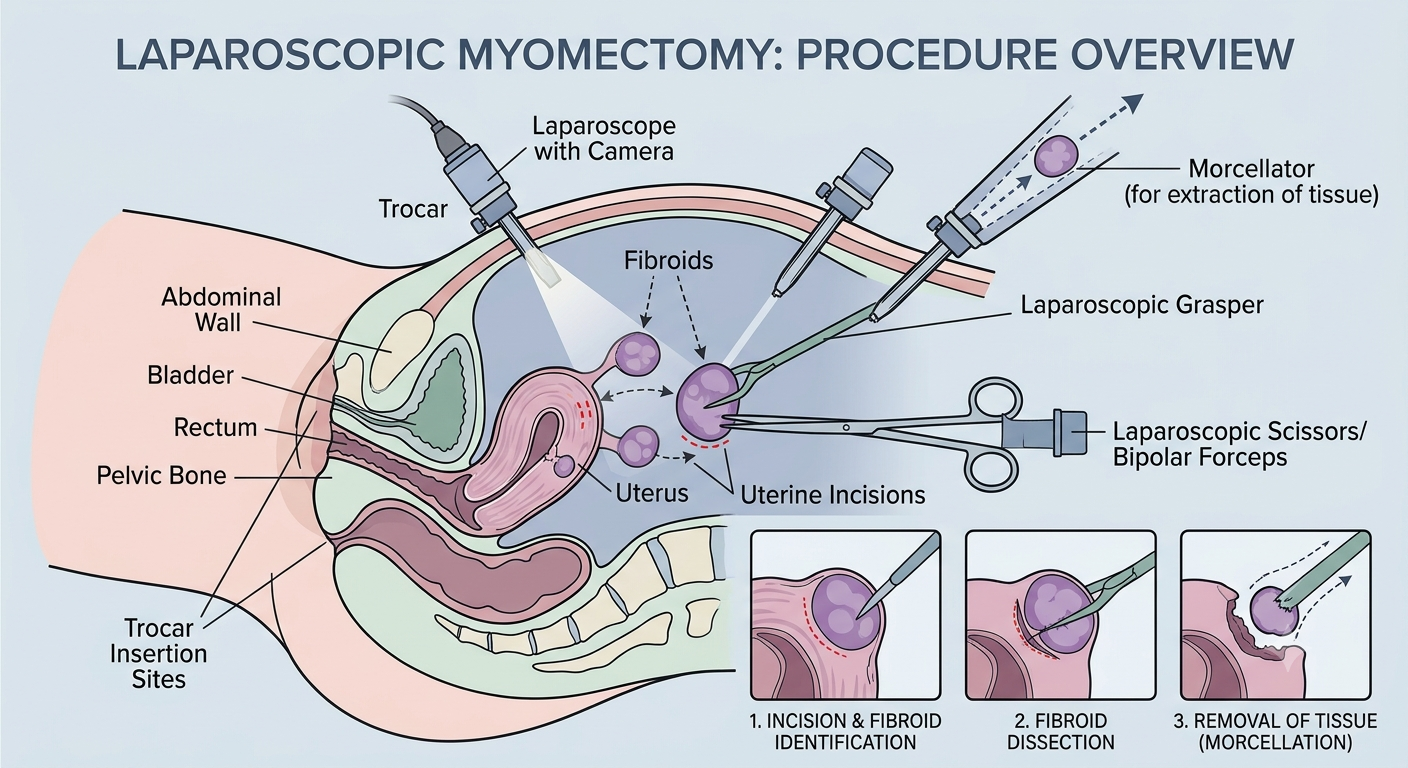
Laparoscopic myomectomy is a surgical method designed to remove fibroids from the uterus using small incisions and a camera-guided instrument called a laparoscope. This technique allows for precision in removing fibroids with minimal impact on surrounding tissues.
Why Is It Used?
This procedure is primarily used to treat symptomatic uterine fibroids, which can cause heavy menstrual bleeding, pelvic pain, and pressure symptoms. By removing these fibroids, laparoscopic myomectomy helps alleviate symptoms and improves the quality of life for many women.
When Is It Recommended?
Laparoscopic myomectomy is recommended for women who:
- Have symptomatic fibroids
- Wish to retain their uterus for future pregnancies
- Prefer a minimally invasive procedure with a shorter recovery time
When Is It Not Appropriate?
This procedure may not be suitable for women who:
- Have very large fibroids or numerous fibroids
- Have underlying health conditions that contraindicate surgery
- Are not concerned with preserving fertility
How It Works
During laparoscopic myomectomy, the surgeon makes several small incisions in the abdomen. A laparoscope is inserted through one of these incisions, providing a video feed to guide the surgeon. Specialized instruments are used to carefully remove the fibroids, and the uterine wall is reconstructed.
What Happens During the Procedure?
1. Anesthesia: The procedure is performed under general anesthesia.
2. Incisions: Small incisions are made in the abdomen.
3. Fibroid Removal: The surgeon removes the fibroids using laparoscopic instruments.
4. Closure: The uterine wall is repaired, and incisions are closed.
Preparation
Before undergoing laparoscopic myomectomy, patients should:
- Discuss all medications with their doctor
- Follow pre-surgery fasting instructions
- Arrange for post-operative care and transportation
Risks & Complications
As with any surgery, laparoscopic myomectomy carries some risks, including:
- Infection
- Bleeding
- Injury to surrounding organs
- Anesthesia-related complications
What to Expect After the Procedure
Recovery from laparoscopic myomectomy typically involves:
- A hospital stay of 1-2 days
- Mild to moderate pain managed with medication
- A return to normal activities within 2-4 weeks
Outcomes
Laparoscopic myomectomy is effective in relieving symptoms associated with fibroids and has a high success rate in improving fertility outcomes for women who wish to conceive.
Alternatives
Alternative treatments for fibroids include:
- Medication to manage symptoms
- Uterine artery embolization
- Traditional open myomectomy
- Hysterectomy (for women who do not wish to preserve fertility)
About Dr. Neeraj Borkar
Dr. Neeraj Borkar is an experienced Obstetrician and Gynaecologist specializing in minimally invasive surgeries and infertility management. With over a decade of experience, Dr. Borkar is committed to providing patient-centric care with a focus on innovative and effective treatments.
Consultation and Next Steps
If you are experiencing symptoms related to fibroids and are considering laparoscopic myomectomy, consult with Dr. Neeraj Borkar to discuss your options and determine the best course of action.
1. How long does a laparoscopic myomectomy take?
The procedure typically takes between 2 to 3 hours, depending on the number and size of fibroids.
2. Can fibroids return after a myomectomy?
Yes, fibroids can recur after surgery, but the risk is lower with laparoscopic myomectomy compared to other methods.
3. Is laparoscopic myomectomy painful?
Patients may experience some pain and discomfort post-surgery, which can be managed with prescribed pain relief.
4. How soon can I try to conceive after the procedure?
It is generally advised to wait 3 to 6 months before attempting to conceive, allowing the uterus to heal properly.
5. Are there any dietary restrictions following the surgery?
Patients are encouraged to follow a balanced diet to support recovery but should avoid heavy or greasy foods immediately after the procedure.
Visit Borkar Multispeciality Clinic
WhatsApp: 7448094626
Email: neerajborkar12@gmail.com
Have a question for Dr. Neeraj Borkar?
Reach out and the clinic will get back to you.
Get in touch