
Back to ResourcesObstetrics & Gynaecology
Laparoscopic Ovarian Drilling: An Informative Guide
Health education · AI-assisted
Dr. Neeraj Borkar•October 28, 2026•1 views
Introduction
Laparoscopic ovarian drilling (LOD) is a minimally invasive surgical procedure used to treat certain types of infertility, particularly in women with polycystic ovary syndrome (PCOS). This procedure can help restore regular ovulation, increasing the chances of conception for women who have not responded to other treatments. This page provides a comprehensive overview of LOD, including its purpose, procedure, and what patients can expect.
What Is Laparoscopic Ovarian Drilling?
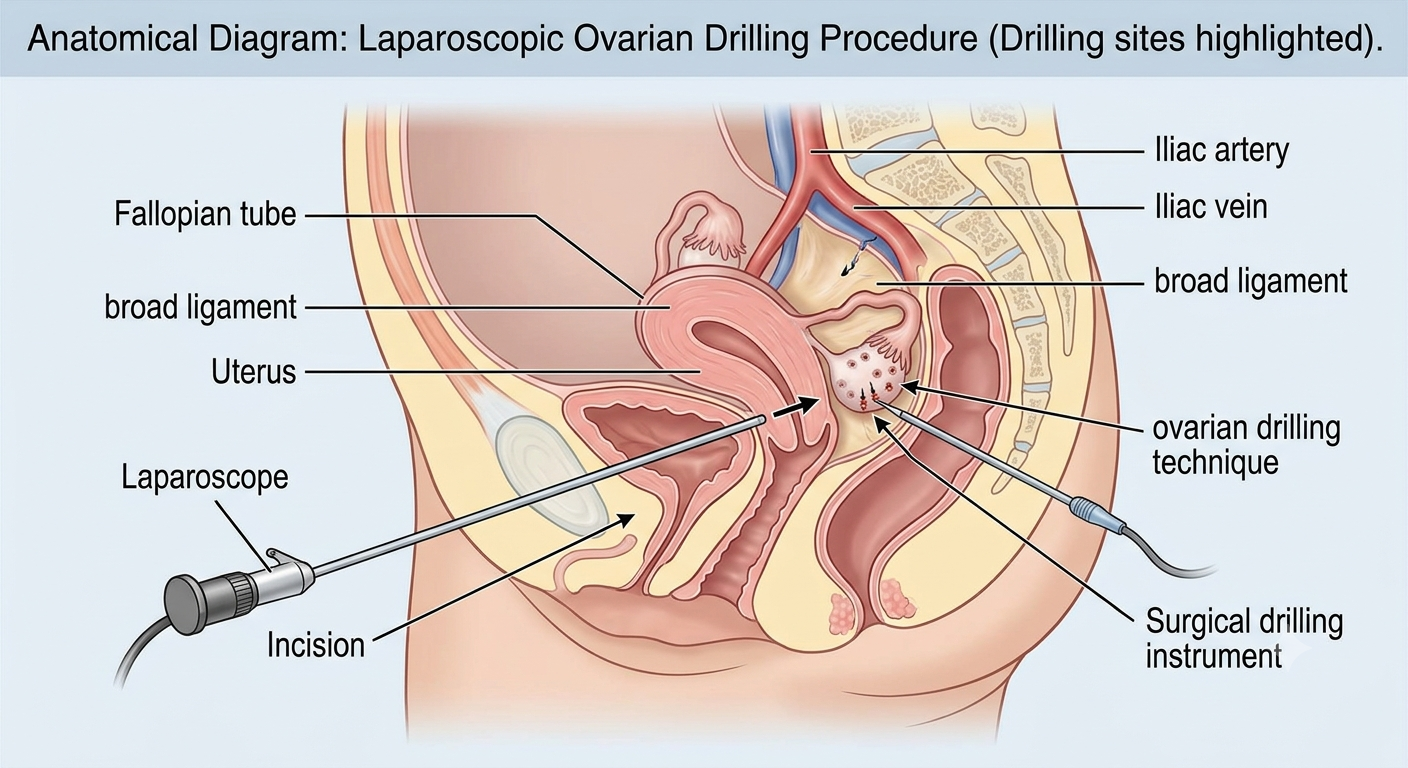
Laparoscopic ovarian drilling is a surgical technique that involves making small incisions in the abdomen to access the ovaries. Using a laparoscope, the surgeon makes tiny holes in the ovarian surface. This process can reduce the production of androgens (male hormones) and stimulate ovulation.
Why Is Laparoscopic Ovarian Drilling Used?
LOD is primarily used for women with PCOS who have not responded to medications like clomiphene citrate or letrozole. It is an option for those seeking to induce ovulation and improve fertility. The procedure helps balance hormone levels and can restore regular menstrual cycles.
When Is Laparoscopic Ovarian Drilling Recommended?
This procedure is recommended for women with PCOS who:
- Have not ovulated with medication alone
- Are experiencing irregular menstrual cycles
- Wish to conceive and have explored other fertility treatments without success
When Is Laparoscopic Ovarian Drilling Not Appropriate?
LOD may not be suitable for women who:
- Have other underlying fertility issues unrelated to PCOS
- Are not candidates for surgery due to other medical conditions
- Are already ovulating regularly
How Does Laparoscopic Ovarian Drilling Work?
During the procedure, the surgeon makes several small incisions in the abdomen and inserts a laparoscope to view the ovaries. Using a specialized tool, the surgeon creates small punctures in the ovarian surface. This process reduces androgen production and can trigger ovulation.
What Happens During the Procedure?
The patient is placed under general anesthesia. The surgeon makes small incisions near the navel and inserts the laparoscope. The ovaries are accessed, and small holes are drilled into them. The procedure typically lasts about 30 to 60 minutes, and the patient can usually go home the same day.
Preparation for Laparoscopic Ovarian Drilling
Patients will need to:
- Undergo pre-operative assessments, including blood tests and imaging
- Follow fasting instructions before surgery
- Arrange for someone to drive them home post-procedure
Risks and Complications
As with any surgery, LOD carries risks such as:
- Infection
- Bleeding
- Adhesions (scar tissue formation)
- Damage to surrounding organs
What to Expect After the Procedure
Post-surgery, patients may experience mild discomfort and bloating. Recovery typically takes a few days to a week. Most women notice improved menstrual cycles and ovulation within a few months.
Outcomes of Laparoscopic Ovarian Drilling
LOD can be effective in restoring ovulation and improving fertility in women with PCOS. However, it is not a guaranteed solution, and some women may still require additional fertility treatments.
Alternatives to Laparoscopic Ovarian Drilling
Other fertility treatments include:
- Medication like clomiphene citrate or letrozole
- In vitro fertilization (IVF)
- Lifestyle changes, such as weight management and diet
About Dr. Neeraj Borkar
Dr. Neeraj Borkar is a specialist in obstetrics and gynaecology with over 10 years of experience. He is known for his expertise in minimally invasive techniques and comprehensive infertility solutions, including laparoscopic ovarian drilling.
Consultation and Next Steps
If you are considering laparoscopic ovarian drilling, consult with a specialist to discuss your options and determine if this procedure is right for you.
FAQs: Clear Answers for Patients
Q1.How successful is laparoscopic ovarian drilling?
LOD can be successful in restoring ovulation for many women with PCOS, but individual results may vary.
Q2.Is laparoscopic ovarian drilling painful?
The procedure is performed under general anesthesia, so patients do not feel pain during surgery. Some discomfort may be experienced during recovery.
Q3.How long does recovery take after laparoscopic ovarian drilling?
Recovery usually takes a few days to a week, with most women resuming normal activities shortly after.
Q4.Can laparoscopic ovarian drilling be repeated?
In some cases, LOD may be repeated if the initial procedure does not yield the desired results.
Q5.Are there any long-term effects of laparoscopic ovarian drilling?
LOD is generally safe, but potential long-term effects include the formation of adhesions or scar tissue.
Have a question for Dr. Neeraj Borkar?
Reach out and the clinic will get back to you.
Get in touch