
Back to ResourcesObstetrics & Gynaecology
Title: Understanding Hysteroscopic Myomectomy
Health education · AI-assisted
Dr. Neeraj Borkar•October 28, 2026•1 views
Introduction
Hysteroscopic myomectomy is a minimally invasive surgical procedure used to remove uterine fibroids, also known as myomas, from the uterus. This procedure is often recommended for women experiencing symptoms such as heavy menstrual bleeding, pelvic pain, or infertility due to fibroids. In this article, we will explore the details of hysteroscopic myomectomy, including its purpose, procedure, and what to expect during recovery.
What is Hysteroscopic Myomectomy?
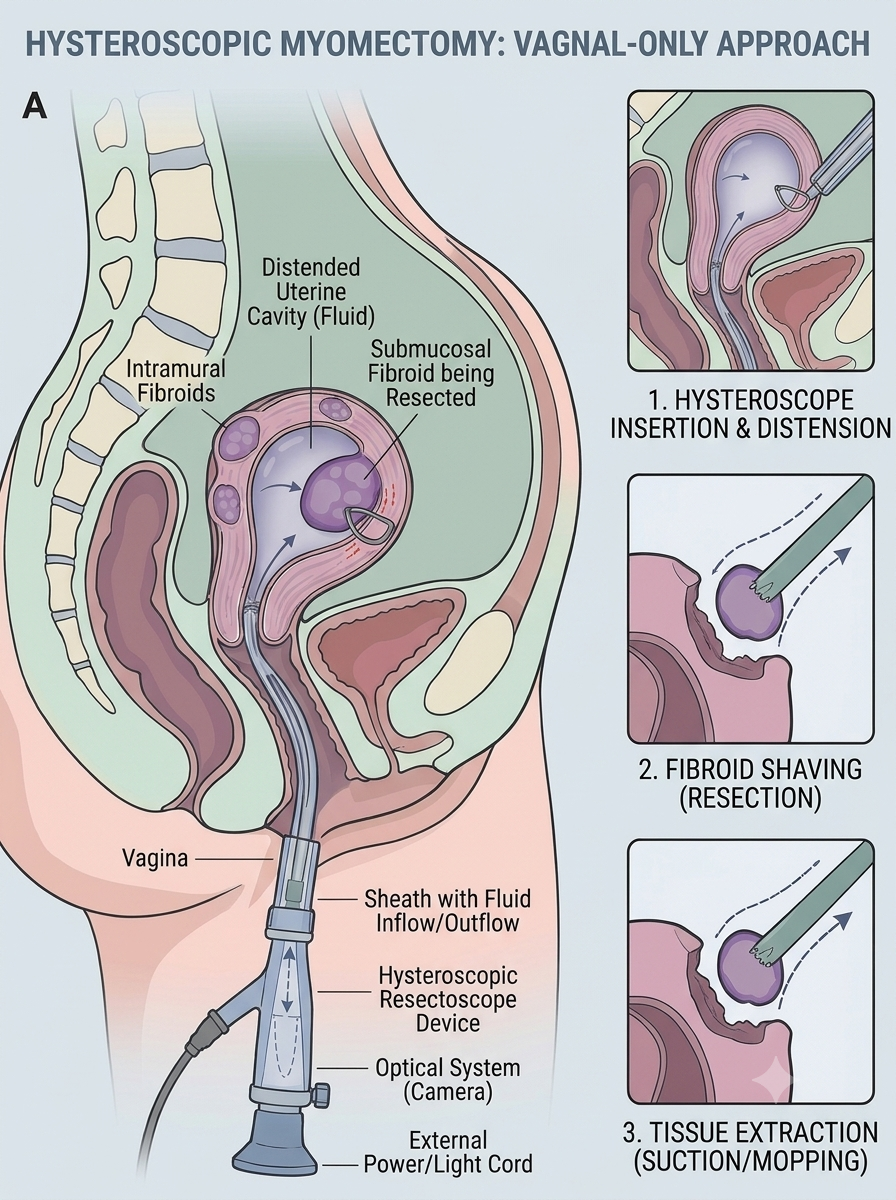
Hysteroscopic myomectomy involves the removal of fibroids using a hysteroscope, a thin, lighted tube inserted through the vagina and cervix into the uterus. This approach allows for the precise removal of fibroids without the need for external incisions, making it a preferred choice for many patients.
Why is Hysteroscopic Myomectomy Used?
This procedure is primarily used to treat symptomatic uterine fibroids that cause heavy bleeding, pain, or fertility issues. By removing these fibroids, hysteroscopic myomectomy can help alleviate symptoms and improve a woman's quality of life.
When is Hysteroscopic Myomectomy Recommended?
Hysteroscopic myomectomy is recommended for women with fibroids that are located within the uterine cavity (submucosal fibroids). It is particularly beneficial for those who wish to preserve their uterus for future pregnancies.
When is Hysteroscopic Myomectomy Not Appropriate?
This procedure may not be suitable for fibroids that are located deep within the uterine wall (intramural fibroids) or on the outer surface of the uterus (subserosal fibroids). Additionally, it may not be recommended for women with certain medical conditions or large fibroids that cannot be removed hysteroscopically.
How Does Hysteroscopic Myomectomy Work?
During the procedure, a hysteroscope is gently inserted through the vagina and cervix into the uterus. A saline solution is used to expand the uterus, providing a clear view of the fibroids. Specialized instruments are then used to remove the fibroids, often in a piecemeal fashion.
What Happens During the Procedure?
Hysteroscopic myomectomy is typically performed under general or local anesthesia. The procedure usually takes about 30 to 60 minutes, depending on the size and number of fibroids. Patients can often return home the same day.
Preparation for Hysteroscopic Myomectomy
Patients may be advised to avoid eating or drinking for several hours before the procedure. It is also important to discuss any medications with the doctor, as some may need to be paused before surgery.
Risks and Complications
As with any surgical procedure, there are potential risks, including infection, bleeding, or injury to the uterus. However, hysteroscopic myomectomy is considered safe, with a low risk of complications.
What to Expect After the Procedure
Recovery from hysteroscopic myomectomy is generally quick, with most patients resuming normal activities within a few days. Some may experience mild cramping or spotting, which typically resolves within a week.
Expected Outcomes
Hysteroscopic myomectomy effectively reduces symptoms associated with fibroids, such as heavy menstrual bleeding and pelvic pain. It can also improve fertility outcomes for women planning to conceive.
Alternatives to Hysteroscopic Myomectomy
Alternative treatments include medication to manage symptoms, uterine artery embolization, and other surgical options like laparoscopic myomectomy, depending on the fibroid's location and size.
About Dr. Neeraj Borkar
Dr. Neeraj Borkar, an expert in Obstetrics and Gynaecology, has extensive experience in performing hysteroscopic myomectomies. With a patient-centric approach and a focus on minimally invasive techniques, Dr. Borkar provides comprehensive care tailored to each patient's needs.
Consultation and Next Steps
If you are experiencing symptoms related to uterine fibroids, consider consulting with Dr. Neeraj Borkar to discuss your options. Early intervention can lead to better outcomes and improved quality of life.
FAQs: Clear Answers for Patients
Q1.What are uterine fibroids?
Uterine fibroids are non-cancerous growths that develop in or on the uterus, often causing symptoms like heavy bleeding and pain.
Q2.Is hysteroscopic myomectomy painful?
The procedure is performed under anesthesia, so patients do not feel pain during surgery. Mild discomfort may occur during recovery.
Q3.How long does recovery take?
Most patients return to normal activities within a few days, although complete recovery may take a week or two.
Q4.Can hysteroscopic myomectomy affect fertility?
This procedure can improve fertility by removing fibroids that interfere with conception or pregnancy.
Q5.Are there any restrictions after the procedure?
Patients are usually advised to avoid strenuous activities and sexual intercourse for a short period after surgery to ensure proper healing.
Have a question for Dr. Neeraj Borkar?
Reach out and the clinic will get back to you.
Get in touch