
Back to ResourcesObstetrics & Gynaecology
Understanding Endometriosis: Causes, Symptoms, and Management
Health education · AI-assisted
Dr. Neeraj Borkar•November 2, 2026•0 views
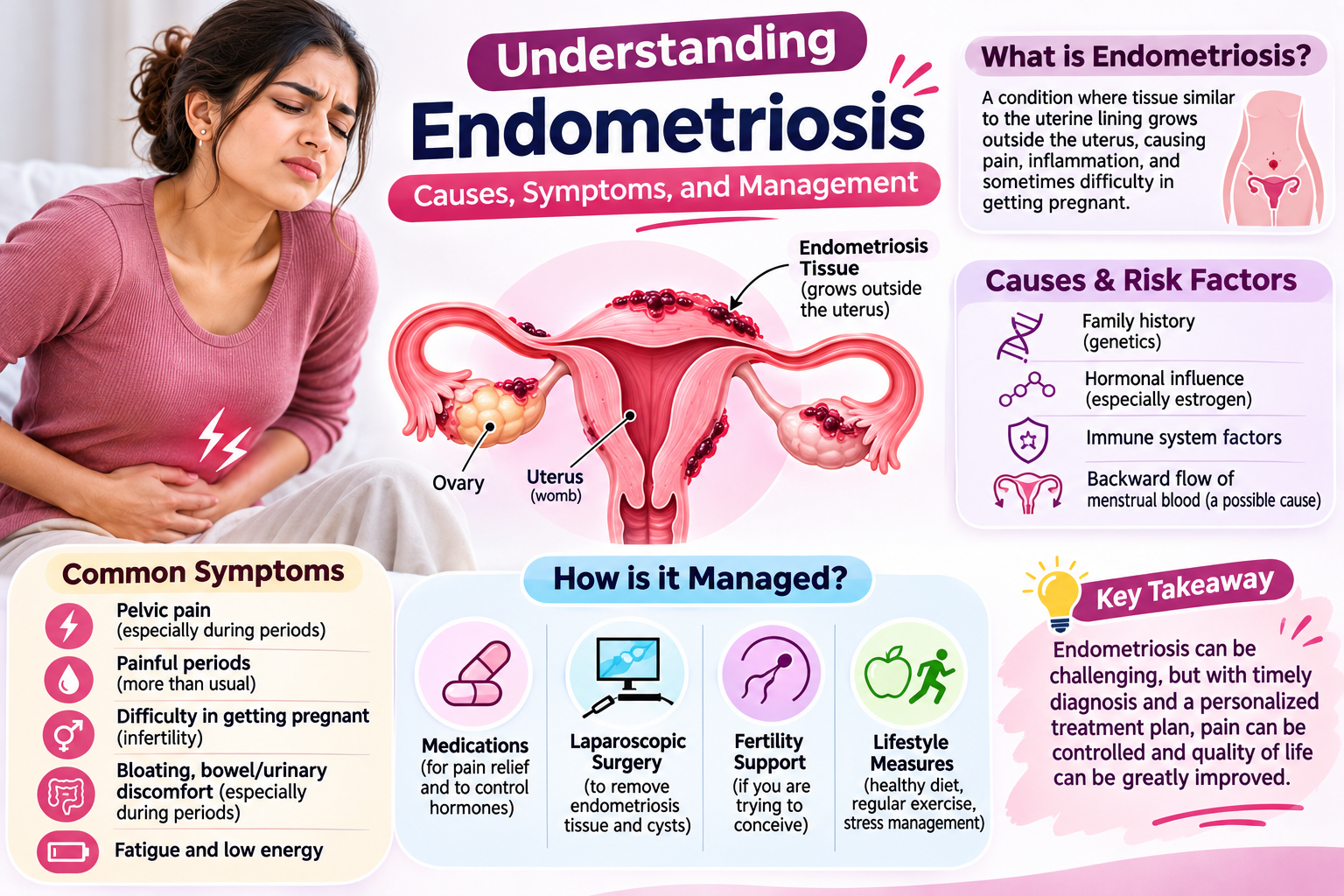
What is Endometriosis?
Endometriosis is a chronic gynecological condition characterized by the presence of tissue similar to the lining of the uterus found outside the uterine cavity. This ectopic endometrial tissue can be located on the ovaries, fallopian tubes, and the pelvic lining. It can lead to inflammation, pain, and the formation of scar tissue.
Causes of Endometriosis
The exact cause of endometriosis remains unclear. However, several theories suggest potential factors, including retrograde menstruation, where menstrual blood flows backward through the fallopian tubes into the pelvic cavity. Genetic predisposition, immune system disorders, and hormonal imbalances are also considered contributing factors.
Symptoms of Endometriosis
Common symptoms of endometriosis include pelvic pain, often associated with menstrual periods. This pain can be severe and debilitating. Other symptoms may include pain during intercourse, excessive menstrual bleeding, and infertility. Some individuals may also experience gastrointestinal symptoms, such as diarrhea, constipation, or bloating.
When to See a Doctor
It is advisable to consult a healthcare professional if you experience severe pelvic pain, especially during menstruation, or if you encounter difficulties conceiving. Early diagnosis and management can help alleviate symptoms and improve quality of life. Dr. Neeraj Borkar, with expertise in obstetrics and gynecology, provides comprehensive care for such conditions.
Diagnosis of Endometriosis
Diagnosing endometriosis often involves a combination of a detailed medical history, pelvic examination, and imaging tests such as ultrasound or MRI. Definitive diagnosis is usually confirmed through laparoscopy, a minimally invasive surgical procedure that allows direct visualization and biopsy of endometrial tissue outside the uterus.
Treatment Options for Endometriosis
Treatment for endometriosis aims to relieve symptoms and improve fertility. Options include hormonal therapies to reduce or eliminate menstruation, pain management strategies, and surgical interventions like laparoscopic surgery to remove endometrial lesions. Dr. Neeraj Borkar specializes in minimally invasive techniques to manage endometriosis effectively.
Prevention and Aftercare
While there is no known way to prevent endometriosis, early diagnosis and treatment can help manage the condition effectively. Aftercare involves regular follow-ups with a healthcare provider to monitor symptoms and adjust treatment plans as necessary. Lifestyle modifications, such as regular exercise and a balanced diet, may also contribute to symptom relief.
Clinic Location & Consultation Information
## Visit Borkar Multispeciality hospital
WhatsApp: 7448094626
Email: neerajborkar12@gmail.com
FAQs: Clear Answers for Patients
Q1.What is endometriosis?
Endometriosis is a condition where tissue similar to the lining of the uterus grows outside it, causing pain and sometimes infertility.
Q2.What are the common symptoms of endometriosis?
Common symptoms include pelvic pain, especially during menstruation, pain during intercourse, and excessive bleeding.
Q3.How is endometriosis diagnosed?
Diagnosis often involves medical history, pelvic exams, imaging tests, and may require laparoscopy for confirmation.
Q4.What treatment options are available for endometriosis?
Treatment options include hormonal therapy, pain management, and surgical interventions like laparoscopy to remove lesions.
Q5.Can endometriosis affect fertility?
Yes, endometriosis can impact fertility, but various treatment options are available to help manage this aspect.