
Back to ResourcesObstetrics & Gynaecology
What is Laparoscopic Hysterectomy?
Health education · AI-assisted
Dr. Neeraj Borkar•October 30, 2026•0 views
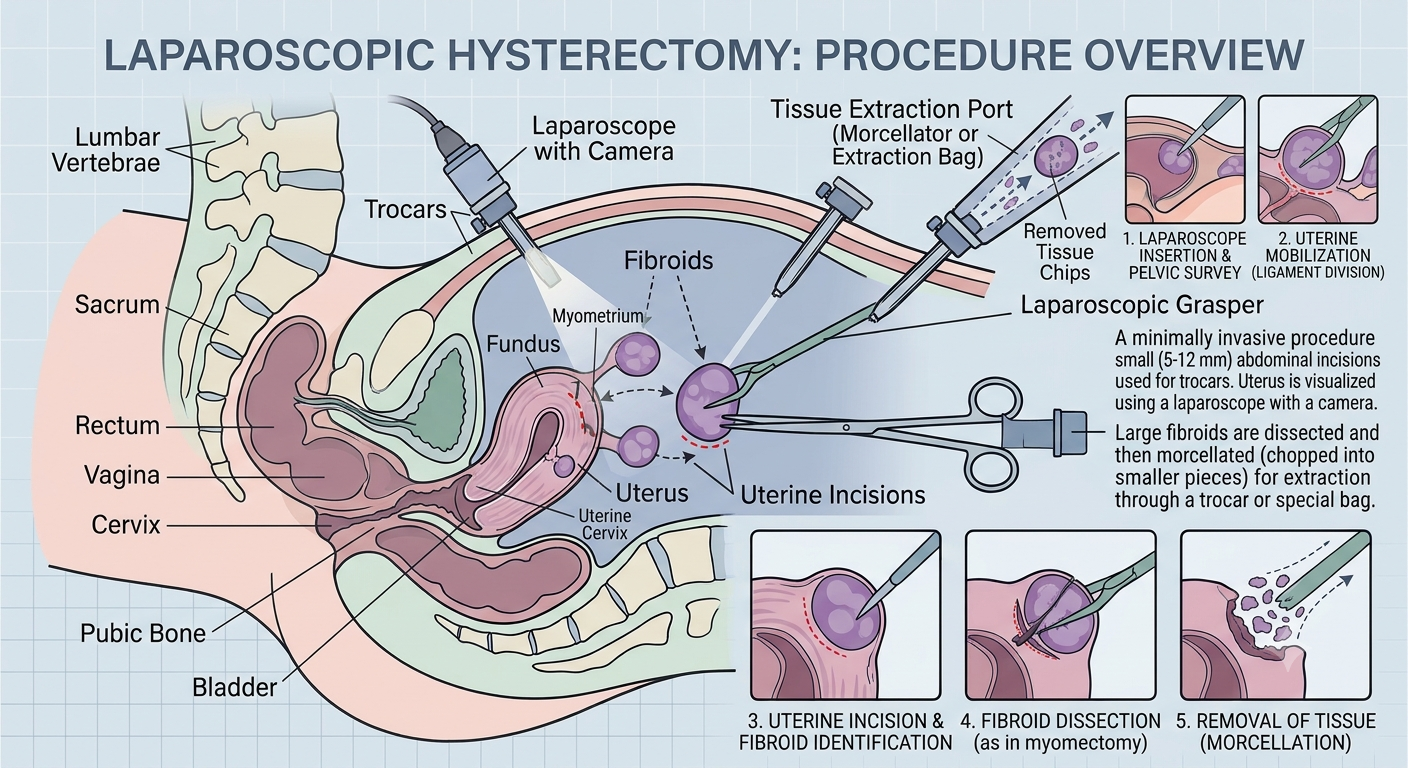
Laparoscopic Hysterectomy: A Comprehensive Guide### Introduction
Laparoscopic hysterectomy is a minimally invasive surgical procedure used to remove the uterus. This technique is often recommended for women experiencing conditions such as fibroids, endometriosis, or uterine prolapse when other treatments have not been effective. This article aims to provide a thorough understanding of the procedure, its benefits, and what patients can expect before, during, and after surgery.
Laparoscopic hysterectomy involves the removal of the uterus through small incisions in the abdomen. Unlike traditional open surgery, this method uses a laparoscope—a thin tube with a camera—to guide the surgeon, resulting in less pain and quicker recovery times for patients.
Why is it Used?
This procedure is primarily used to treat various gynecological conditions, including:
- Uterine Fibroids: Non-cancerous growths in the uterus that can cause pain and heavy bleeding.
- Endometriosis: A condition where tissue similar to the lining inside the uterus grows outside it.
- Uterine Prolapse: When the uterus slips down into or protrudes out of the vagina.
- Chronic Pelvic Pain: Persistent pain in the lower abdomen.
When is it Recommended?
Laparoscopic hysterectomy is recommended when:
- Non-surgical treatments have failed.
- The patient prefers a minimally invasive option.
- Faster recovery is desired.
When is it Not Appropriate?
This procedure might not be suitable for patients with:
- Severe obesity
- Large uterine fibroids that cannot be removed laparoscopically
- Previous surgeries that have caused significant scar tissue
How Does it Work?
During the procedure, the surgeon makes small incisions in the abdomen. A laparoscope is inserted to provide a visual of the pelvic organs. Surgical instruments are then used to detach the uterus, which is removed through the incisions.
What Happens During the Procedure?
- Anesthesia: The patient is given general anesthesia.
- Incisions: Small incisions are made in the abdomen.
- Removal: The uterus is detached and removed.
- Closure: Incisions are closed with sutures or staples.
Preparation
Patients should:
- Discuss all medications with their doctor.
- Arrange for someone to drive them home post-surgery.
- Follow fasting instructions as advised by the surgeon.
Risks and Complications
While generally safe, potential risks include:
- Infection
- Bleeding
- Damage to surrounding organs
- Anesthesia-related complications
What to Expect After Surgery
- Recovery Time: Most patients can return to normal activities within 2-4 weeks.
- Pain Management: Pain is usually managed with medication.
- Follow-Up: A follow-up appointment is necessary to monitor healing.
Outcomes
The majority of patients experience relief from symptoms and improved quality of life after recovery. Regular follow-ups ensure that any complications are addressed promptly.
Alternatives
Other surgical options include:
- Abdominal Hysterectomy: Involves a larger incision and longer recovery.
- Vaginal Hysterectomy: The uterus is removed through the vagina without abdominal incisions.
About Dr. Neeraj Borkar
Dr. Neeraj Borkar, a specialist in Obstetrics & Gynaecology, offers expertise in minimally invasive techniques, including laparoscopic hysterectomy. With a patient-centric approach, Dr. Borkar ensures comprehensive care tailored to each individual's needs.
Consultation-Next-Step
If you are considering a laparoscopic hysterectomy or have further questions, please consult with Dr. Neeraj Borkar at Borkar Multispeciality Clinic in Margao, Goa.
1. How long does the procedure take?
The surgery typically lasts between 1 to 3 hours, depending on the complexity.
2. Will I need to stay overnight in the hospital?
Most patients go home the same day, but some may require an overnight stay for observation.
3. Can I still have children after a laparoscopic hysterectomy?
No, the removal of the uterus means that you will not be able to conceive children.
4. Are there any long-term effects?
Most women experience positive long-term outcomes, such as relief from symptoms. Hormone levels are not typically affected unless the ovaries are also removed.
5. How soon can I resume normal activities?
Light activities can usually be resumed within a few days, but strenuous activities should be avoided for at least 4-6 weeks.
Have a question for Dr. Neeraj Borkar?
Reach out and the clinic will get back to you.
Get in touch